
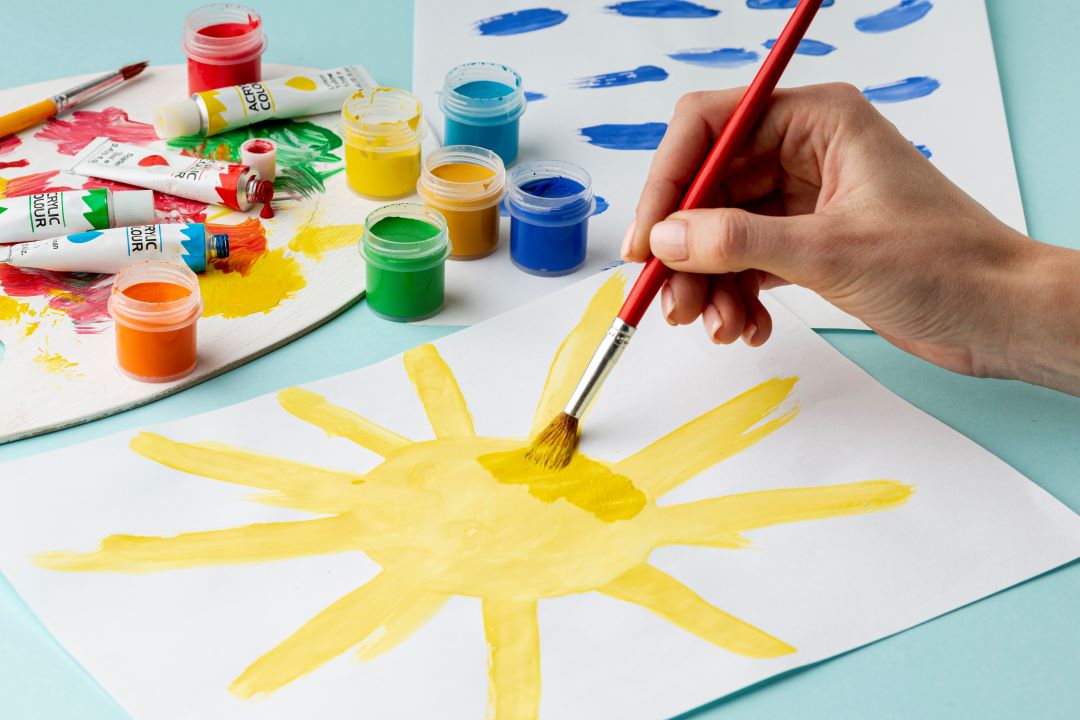

For beginners, the best tips for learning how to paint include starting with one medium, such as acrylics, to simplify the learning process and focus on foundational skills.
Working on a canvas or paper, beginner painters should explore creating basic shapes and using a limited palette or a primary palette to understand color mixing.
It’s essential to invest in good quality brushes, paint tubes, and materials to ensure better results and a smoother creative journey.
Beginner painters can practice with mini paintings to refine their techniques before advancing to larger works.
Exploring different mediums over time, like oils for aspiring oil painters, can help broaden skills and provide insight into the diverse art world.
Prioritizing paint quality and focusing on the process rather than rushing to achieve a finished painting will foster growth and confidence in new painters.

How to learn painting for beginners?
To learn painting for beginners, start by selecting one medium to focus on, such as watercolor, acrylic, or oil, and gather essential tools like brushes, a canvas or paper, and paint tubes with a limited primary palette.
Understanding the process of creating shapes and experimenting with different mediums helps beginner painters find their style and explore the art world.
Start with mini paintings to practice techniques and pay attention to paint quality, as it impacts the overall look of a finished painting.
By prioritizing a quality medium and simple tools, you can build confidence and enjoy a rewarding creative journey as a budding painter.

How to learn painting at home?
To learn painting at home, begin with understanding your art goals and selecting the right tools, such as brushes, paint tubes, quality paper, and a suitable painting medium like acrylic or oil paints.
Start by familiarizing yourself with drawing basic shapes, as this forms the foundation of any artwork.
Practice creating light and shadow to add depth to your work. Begin painting step by step, experimenting on canvas with simple designs, and gradually move into more complex compositions.
Explore various colors, like blue and other shades, to express emotions and add vibrancy to your art. Dedicate time to practicing regularly, building your innate talent, and improving your techniques.
Learning painting at home for free is possible by utilizing online tutorials, art blogs, and instructional videos, which can teach essential art fundamentals and oil painting processes.
Seeking feedback from other painters or art enthusiasts will help refine your skills as you grow in this fulfilling hobby.

How to start painting as a hobby?
To start painting as a hobby, it’s important to gather the right materials and develop a basic understanding of the process.
For beginners, starting with acrylic painting can be an excellent choice as it is a versatile and beginner-friendly medium.
Choose a quality painting kit that includes brushes, paints in key colors like blue and yellow ochre, and a canvas or paper to work on.
If you’re interested in oil painting, investing in supplies specifically designed for oil painters is essential, as this medium requires additional tools such as oil mediums and cleaning solutions.
Begin by focusing on simple subjects like still life or basic shapes to practice control and shading.
The step-by-step approach involves preparing your canvas, sketching your subject, layering colors from light to dark, and refining details.
Pay attention to light and color to bring your creation to life. With consistent practice and experimentation, you’ll learn to express your creativity and develop your unique style as a painter.

How to learn painting?: A step by step guide to beautiful paintings
You learn painting by focusing on fundamental techniques and understanding the tools required to create your art.
For beginners interested in canvas painting, starting with acrylic painting is ideal due to its versatility and quick drying time.
Begin by gathering essential supplies such as acrylic paint tubes, brushes, and a good-quality canvas.
Acrylic painters often start with simple shapes and still life compositions to practice balance and light in their art.
Free step-by-step painting tutorials online are excellent resources to guide you through the process of creating clean colors and precise compositions.
To further explore, mini painting projects can help you experiment with color, brushes, and mediums while improving control.
Pay attention to paint quality; avoid products with added fillers to ensure vibrant and long-lasting results for your finished painting.
Oil painting, while rewarding, requires different techniques, such as blending colors over a longer drying time and using specific mediums to achieve depth.
Acrylic painters and oil painters alike should focus on establishing a solid process, practicing regularly, and experimenting on paper or small canvases before moving on to more complex works.
With patience and focus, any aspiring artist can begin painting beautiful pieces that reflect their creativity.

How should a beginner start painting?
A beginner should start painting by choosing a medium that appeals to them, such as acrylic, watercolor, or oil, as this sets the foundation for developing their own artistic style.
Next, gather basic art supplies, including a primary palette of colors like red, yellow, blue, and white, along with quality brushes, a canvas, and sketching tools for drawing shapes and compositions.
Learning fundamental techniques and concepts is essential; study how the old masters approached their process, focusing on elements like still life and the interplay of light and color in their artwork.
Practice regularly by creating small, manageable projects that help build confidence and refine your skills as a painter.
By focusing on such steps, you’ll gradually develop as an artist and build a deep appreciation for the art form while honing your unique style.

How to learn to paint by yourself?
You can learn to paint by yourself by understanding basic art principles like color theory and composition. Start by exploring the primary palette, including colors like ultramarine blue, titanium white, and yellow ochre, to grasp how they interact and mix.
Practice regularly by working on your drawing skills and experimenting with shapes and designs to enhance your composition.
Exploring different painting mediums, such as acrylics with their quick drying time, traditional oils, water mixable oils, or watercolor painting, will allow you to discover the best fit for your creative journey.
Online tutorials and exercises can help you refine your techniques while introducing you to essential design principles in art.
Joining an art workshop from art schools such as Space Bears Studios is another excellent way to gain insights into paint quality and methods, connect with fellow artists, and stay inspired.
Remember, your growth as an artist will vary depending on practice and experimentation, as well as your innate talent in creating beautiful works of art.

What is the easiest thing to paint as a beginner?
As a beginner, the easiest thing to paint includes large subjects, geometric patterns, and the use of clean colors with simple techniques.
Beginner painters can focus on creating compositions with color blocks or close-up objects like basil leaves, silhouettes, or watercolor watermelon, which help build a solid foundation.
Experimenting with different mediums, such as acrylic paints or watercolors, allows artists to explore various techniques like layering shapes, blending different values, and controlling light on paper or canvas.
Examples include painting simple trees, a gouache teacup, pop art-style colorful desserts, watercolor peonies, or even fantasy unicorns.
Beginner artists, using student-grade materials, can also try smaller projects like spring wildflowers, black and white facial features, or holiday cards.
These subjects enable painter students to understand the art world better while honing their skills in mediums like oil or acrylic.
Mini paintings such as cats in ink, birch trees, or digital eagles provide a variety of techniques, ensuring the learning process won’t feel overwhelming but fun, encouraging the artist to experiment and begin painting with confidence.

How to start painting with no experience?
To start painting with no experience, begin by gathering basic supplies like acrylic paints, brushes, and canvases, ensuring they are of good quality but suitable for a beginner.
Start with one medium, such as acrylics, watercolors, or water mixable oils, as this simplifies the learning process.
Focus on creating art using a limited palette to explore how colors interact and blend. Choose simple subjects like still lifes, abstract patterns, or basic shapes to build your confidence with composition and techniques.
Leverage online tutorials, beginner classes, or guidance from other artists to understand essential methods such as blending, layering, and brush control.
Remember that the painting journey is a creative process; enjoy self-expression rather than striving for perfection.
Whether working with oil, watercolor, or acrylic, every stroke enhances your skills and deepens your connection to this timeless art form.
Once you’ve get the hang of painting, you can dive and explore into more painting styles! Discover what are the different types of painting styles here!
Leave a Reply