
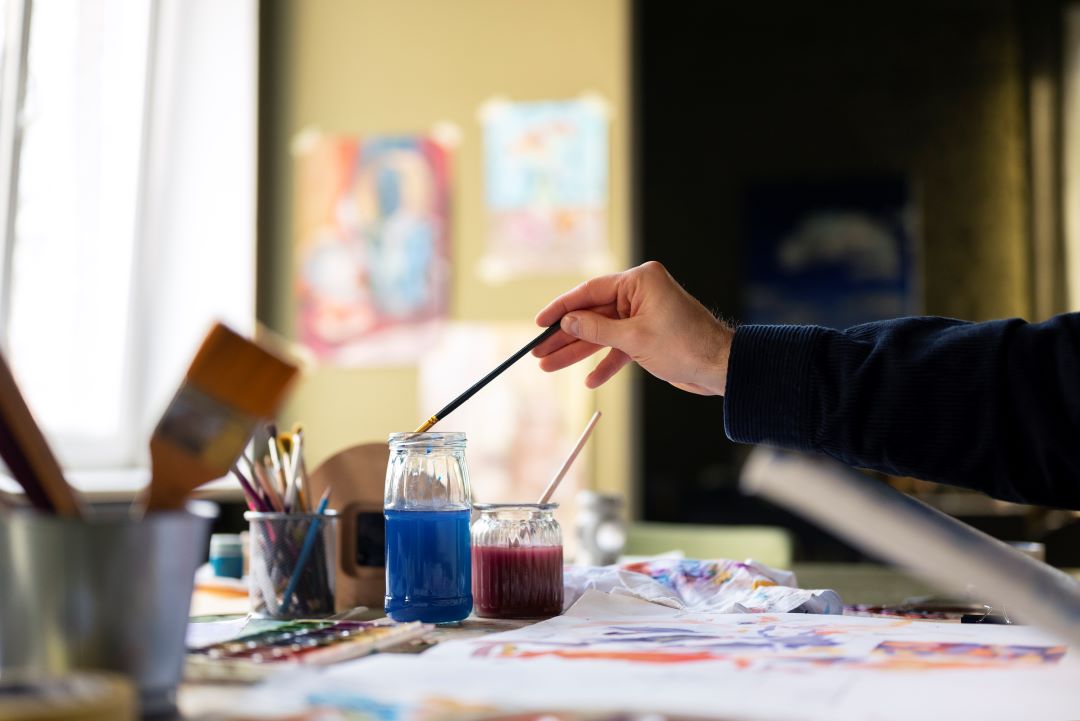

Improving your painting skills requires practice, exploration, and dedication.
Key approaches include experimenting with different techniques, studying the works of masters, and expanding your knowledge of color theory.
Regular practice sharpens your abilities, while seeking constructive feedback helps identify areas for improvement.
Utilizing high-quality materials can enhance your work, and learning to perceive light and shadow adds depth to your paintings.
Joining art communities or taking workshops provides valuable insights and inspiration.
Finally, keeping a sketchbook and exploring various styles ensures constant growth and creativity in your painting journey.
These strategies collectively contribute to becoming a more skilled and expressive artist.

What are the 10 ways to improve your painting skills for adults?
For adults, the 10 ways to improve your painting skills is to focus on developing a deeper understanding of your materials, such as watercolor or acrylics, and their unique properties, ensuring good art begins with solid knowledge.
Experimenting with new tools can spark creativity and refine techniques, while planning your composition ahead of time helps align your vision with the final painting.
Practicing daily, even for a few moments, strengthens skills and keeps the process fun.
Studying nature improves your ability to capture realistic forms and color schemes, while simplifying shapes can make complex scenes more approachable.
Visualization plays a key role in creative problem-solving, helping painters bring imagined ideas to life.
Visiting art museums inspires creativity by exposing creators to different styles and examples of mastery.
Identifying and addressing personal weaknesses, whether in composition, technique, or detail, allows growth and progression.
Ultimately, frequent practice and discovery transform painting into an enjoyable and ongoing learning matter.

1. Know your Materials Inside and Out
It is important to understand your materials is essential for refining your painting skills. Familiarizing yourself with the properties of different brushes, paints, and surfaces can help you achieve better control and more predictable results in your work.
Knowing how various mediums interact, such as how oil paint behaves differently from acrylic, allows you to expand your techniques and experiment with confidence. When you master your tools, you can focus more on creativity and self-expression while minimizing technical challenges.
2. Try a New Tool
Experimenting with new tools can unlock fresh techniques and approaches to painting that you might not have considered before.
Whether it’s switching to a palette knife, trying different types of brushes, or exploring unconventional tools like sponges or spray bottles, each can inspire creativity and teach you new ways to manipulate paint.
This practice not only enhances your technical skills but also offers opportunities for discovering unique textures and effects that can elevate your artwork.

3. Plan Your Painting
Taking the time to plan your painting can significantly enhance your skills and the final outcome of your work.
By sketching ideas, selecting a color palette, and visualizing the composition beforehand, you’ll approach the canvas with clarity and confidence.
This process helps eliminate uncertainty during painting and ensures a more cohesive finished piece.
Planning also allows you to focus on key elements like balance, perspective, and focal points, leading to continuous improvement in your technique.
4. Do a Little Bit Every Day (Even 10 minutes)
Consistency is key when it comes to improving your painting skills. By dedicating even just 10 minutes a day to practice, you build discipline and make gradual progress over time.
This daily routine allows you to experiment, refine your techniques, and foster creativity without feeling overwhelmed.
Regular practice also helps strengthen your muscle memory and deepens your understanding of brushwork, color blending, and composition.
Ultimately, small, consistent efforts lead to significant improvements in your painting abilities.

5. Study nature
Spending time observing and analyzing nature can greatly enhance your painting skills by providing a deeper understanding of color, light, and texture.
Nature offers endless inspiration, from the intricate details of leaves to the vastness of a sunset, allowing artists to improve their ability to replicate dynamic compositions.
By studying how shadows fall or how colors shift with changing light, painters can bring more realism and vitality to their work.
Engaging with nature also fosters creativity, helping you develop unique ideas and new perspectives for your art.
6. Simplify Forms
Simplifying forms helps you focus on the fundamental shapes and structures within your composition, making complex scenes more approachable.
By breaking down objects into basic geometric shapes, you can better understand proportions, balance, and spatial relationships.
This practice not only enhances your ability to capture the essence of your subject but also builds a strong foundation for adding details later.
Simplifying forms is a valuable skill for both beginners and seasoned painters looking to create more impactful and visually cohesive artwork.

7. Visualize
Visualization is a powerful tool for improving your painting skills. By imagining your composition before you start, you can better plan your color palette, shapes, and overall structure.
This mental rehearsal helps you work with more intention and focus, resulting in a more cohesive and compelling piece.
Visualizing your artwork also stimulates creativity, allowing you to explore different ideas and solutions without committing to them on the canvas first.
Practicing visualization regularly can build confidence in your artistic decisions and improve your ability to execute your vision effectively.
8. Visit an Art Museum
Visiting an art museum provides a wealth of inspiration and learning opportunities for improving your painting skills.
Observing masterpieces up close can help you understand techniques such as brushwork, composition, and color theory used by renowned artists.
You can analyze how they tackled challenges like lighting and perspective, gaining insights to apply in your own work.
Museums also expose you to a variety of artistic styles and cultural influences, broadening your creative horizons.
Immersing yourself in an environment surrounded by art can spark new ideas and fuel your passion for painting.

9. Discover Where You Are Weak
Identifying your weak areas is a helpful step toward becoming a better artist. By acknowledging where your skills need improvement, such as color theory, composition, or brushwork, you can create a focused plan to address these challenges.
This practice allows you to turn weaknesses into strengths and produce good art that reflects your growth.
For instance, experimenting with watercolor techniques can be a fun and rewarding way to explore new methods and refine your abilities.
Additionally, analyzing your work critically and seeking feedback from others can generate wonderful ideas for improvement while inspiring you to achieve a good painting every time.
By taking the time to discover your weaknesses, you set yourself on a path of continuous learning and creative fulfillment.
10. Practice
Practice is the foundation of improving any skill, and painting is no exception.
By dedicating time to regular practice, whether in watercolor, drawing, or other mediums, you begin to master the essential techniques and develop a deep understanding of the characteristics of good art.
Practice allows you to explore different shapes and compositions, refining your artwork over time.
Taking a break when needed and returning with a fresh perspective can also enhance your creative process.
Through consistent effort, you gain the knowledge to identify areas for improvement and the skills to address them effectively.
Engaging in practice, sharing your work, and discussing it with others lets you talk about your process and get constructive feedback—answering questions and challenges along the way helps you grow as an artist.
Writing reflections on your artistic process can further clarify your progress and goals, ensuring you stay on the path to creating outstanding artwork.

What are some essential painting skills and techniques for beginners?
When starting your painting journey, understanding various techniques can significantly enhance your skills and creative process.
Techniques like underpainting provide a foundation for your artwork by laying down a base layer to establish tonal values.
Dry brushing, on the other hand, is useful for creating texture, especially on rough surfaces like paper or canvas.
Sgraffito is a playful method where you scrape away layers of paint to reveal colors beneath, adding depth and detail to your art.
For visual artists drawn to translucent effects, glazing is an excellent painting process.
By layering thin, transparent washes of paint, you can create rich color combinations and achieve a luminous quality.
Gestural painting involves loose, expressive strokes that bring energy and life to the artwork, perfect for conveying motion or emotion.

Stippling, using small dots to build texture or a focal point, is another technique that can add intricacy and depth to your composition.
Innovative skill paint methods like pouring and splattering make painting an exciting and fun experience.
These techniques involve a level of unpredictability, adding dynamic shapes and textures that can lead to good art through experimentation.
Dabbing, using a sponge or cloth, helps create soft transitions and vibrant highlights in your painting medium.
Using a palette knife is a direct yet effective way to apply thick layers of paint, adding bold textures and unique characteristics to your work.
Mastering these techniques equips painters with the knowledge to confidently answer the challenges of creating a good painting, whether in watercolor, acrylic, or oil.
A strong understanding of color theory and the ability to explain the importance of a balanced focal point can elevate your art to the next level.
These skills don’t just improve your painting—they lead visual artists to connect with the joy of creating and achieving meaningful results in their work.
Whether you’re exploring an art museum for inspiration or practicing on paper, each technique contributes to refining your skills and helping you understand what makes good art truly remarkable.

How to improve my acrylic painting skills?
You can improve your acrylic painting skills by focusing on foundational techniques, experimenting with materials, and practicing consistently.
Many artists create wonderful works by starting with basic skills such as underpainting, color studies, and understanding the characteristics of light and shadow.
For example, doing simple color studies can help you develop an eye for blending and balance in your artwork.
When painting on canvas, it is important to use good materials and break down the process into manageable steps—this will lead to steady improvement.
For beginners, using techniques like dry brushing and palette knife painting allows you to explore different textures and shapes.
If you are working with acrylic paint on paper, be sure to prepare the surface properly to prevent warping and use layers to build up depth.
Practicing with different techniques and learning to simplify forms will not only improve your art but also help you talk through the process and explain your methods effectively.
These steps, combined with consistent effort, will do a great job of answering the challenge of becoming a skilled painter.

What are some painting exercises for beginners?
Some painting exercises for beginners include practicing basic techniques to create a strong foundation for your art skills.
For example, start with simple color studies to understand color blending and gradients, which are fundamental to the painting process.
On canvas, experiment with dabbing and dry brushing to master texture creation and depth, crucial skills for both watercolor and oil paints.
Another helpful exercise is painting geometric shapes or patterns, as this allows new painters to talk and reflect on their brush control and precision.
Materials matter greatly in developing your knowledge, so practice using different brushes and mediums to explore how they behave.
Additionally, try recreating a simple still life to focus on light and shadow, an essential part of the art process.
These exercises offer direct answers and insights to improve not only your technical abilities but also your ability to create meaningful art.
Remember, every point of practice helps you grow your art skills, and consistent effort ensures you’ll master a variety of techniques.
Lastly, stay patient and enjoy the job of learning; it is the key to becoming a skilled painter.

How can I improve my painting?
You can improve your painting by gaining an in-depth knowledge of your materials and exploring new tools.
Understanding the properties of brushes, paper, oil paints, or watercolor can greatly impact your painting process, helping you develop techniques that enhance your skills.
Many artists find it helpful to plan their painting by focusing on composition, color studies, and visualizing ideas beforehand.
Simplifying shapes can also make the process less overwhelming, allowing you to break down complex forms into manageable steps.
Practicing every day is crucial to master good painting techniques, as it gives painters the chance to refine their craft and discover what works best for them.
Studying nature is an excellent way to learn how to create realistic forms and color combinations, while applying knowledge of color theory.
Visiting an art museum can provide inspiration, offer examples of good art, and help you see how other artists approach shapes and composition.
Taking time to reflect on your work allows you to discover your weaknesses and identify areas for improvement.
No matter how experienced you are, the key to becoming a better painter lies in consistent practice and thoughtfulness throughout the painting process.
Wanting to improve your oil painting skills? Check out the top 10 beginner oil painting mistakes to avoid!

What is the 80/20 rule in painting?
In painting, the 80/20 rule states that 80% of a painting’s impact comes from focusing on the crucial 20% of the artwork, rather than striving to perfect every detail.
This principle encourages artists to prioritize key elements such as composition, shapes, and the main subject, which lead to a stronger final product.
By avoiding overworking minor details, artists can break through creative blocks and hear their artwork take life more vibrantly.
This approach is especially helpful in mediums like watercolor, where fluidity and spontaneity are crucial.
Techniques such as quick sketches and simplifying forms help artists develop their skills and create impactful art.
Practice is vital—experimenting with ideas, refining brush techniques, and mastering how to balance detail vs. boldness in a piece can greatly enhance the process.
For example, working on paper with limited timeforces artists to focus on the essence of their subject, rather than getting lost in minutiae.
By applying the Pareto Principle, artists can gain knowledge, save time, and better manage their job as creators, ensuring their art speaks with power and clarity.

What are the 7 principles of painting?
The 7 principles of painting are balance, contrast, emphasis, movement, pattern, rhythm, and unity/variety, and they serve as essential guides for artists to create compelling and harmonious artwork.
Balance involves distributing visual weight through shapes, light, or colors, while contrast highlights differences to draw attention to specific areas of the composition.
Emphasis is used to ensure the subject or focal point stands out, often achieved through color schemes or detail, making the painting more engaging.
Movement guides the viewer’s eye across the artwork, often inspired by rhythm and patterns that build structure into the composition.
These elements work together to form unity and variety, ensuring that the piece feels cohesive yet interesting.
Watercolor painters often use these principles when practicing color studies, experimenting with materials, and generating new ideas.
For example, many painters might imagine light reflecting on their subject to explain or emphasize contrast.
Through practice and the fun process of exploring mediums, artists can lead themselves to wonderful compositions full of vibrant ideas and art that captivates viewers.
Whether writing down ideas or discussing their approach, painters should never forget the importance of these principles, as they form the foundation of their artistic job.

What skills do painters need?
Painters need technical skills like mastering brushwork, understanding color theory, and having comprehensive material knowledge to create wonderful and illustrative artwork.
For example, practicing different painting techniques and experimenting with a variety of painting mediums, such as watercolor or acrylics, can help visual artists develop a strong sense of their craft.
Physical dexterity and stamina also play a vital role in managing the process of art-making, as holding a brush steady and working on large-scale compositions require precision and endurance.
Beyond these fundamental skills, soft skills like communication and attention to detail are equally important, as they allow artists to explain their ideas effectively and focus on the characteristics of their subject.
Engaging in color studies or life drawing is a helpful practice to master the interplay of light and shadow.
No matter the medium chosen, artists should never forget the joy and fun of the job—it’s all part of bringing imagination to life.
Developing good art is a bit of a balancing act but focusing on the key points of composition and color combinations allows painters to create impactful and meaningful art.
Leave a Reply