
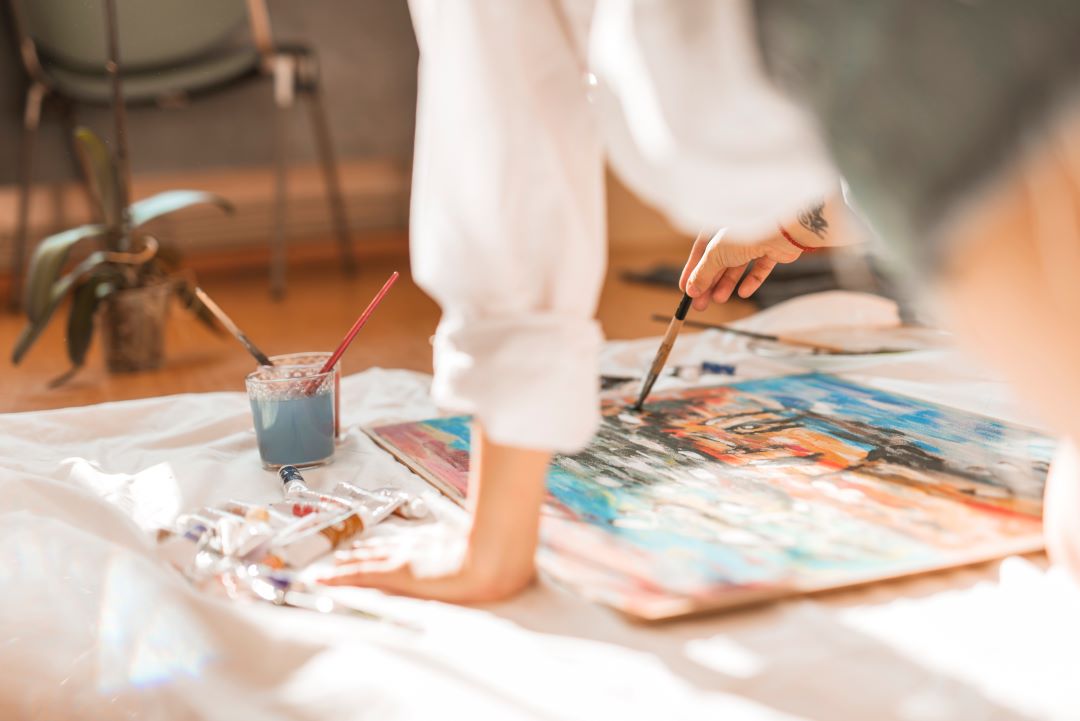
To avoid common painting mistakes, it is essential to prepare surfaces properly, use the right tools, and follow best practices such as applying even coats and allowing adequate drying time between layers. However, there are also specific techniques and tips that can help you avoid some of the most common painting mistakes.

How to avoid common painting mistakes on canvas?: Beginner Painting Mistakes
To avoid common painting mistakes on canvas, begin by selecting the appropriate materials, such as oil painting supplies for detailed work or acrylic paint for faster drying times.
Using high-quality items like titanium white or versatile acrylics can enhance your artwork, while ensuring wet paint is managed carefully to prevent smudges or unintended mixing.
Having the correct materials is the first step in creating art that is easier to fix if mistakes occur.

1) No paint preparation
Failing to prepare your paint can lead to uneven textures, poor color consistency, or undesirable results on your canvas.
To avoid this mistake, always ensure that your paints are properly mixed before starting your work.
If using acrylics or oils, consider adding a medium or thinning agent to achieve the desired consistency.
Additionally, test your colors on scrap paper or a palette to ensure they blend harmoniously and match your intended vision.
Taking the time to prepare your paints can significantly enhance the quality of your artwork.
2) Using too much Paint
Using too much paint can lead to unintended texture, clumping, or an overly thick layer that takes longer to dry and may crack over time.
To avoid this, always start with small amounts of paint on your brush or palette knife and gradually add more as needed.
Practice layering thin coats to build up color and depth instead of applying thick layers all at once.
Additionally, ensure to use a well-maintained brush suited for your painting style, as overloaded or improper tools can exacerbate the problem.
Cleaning and replacing brushes regularly will also help you maintain better control over your application.

3) Creating Mud
Creating mud happens when colors are overmixed or too many layers of paint are blended together, resulting in dull or murky tones rather than vibrant hues.
To avoid this, practice layering colors with light strokes and allow each layer to dry before adding another.
Use a clean brush or palette knife when mixing to prevent unintended color contamination.
Additionally, study basic color theory to understand which colors blend harmoniously, helping to achieve the desired result without muddiness.
4) Skipping the Foundation Steps
One of the most common mistakes beginners make is jumping straight into painting without properly preparing their canvas or planning their composition.
To avoid this, always start by priming your canvas with gesso, which not only creates a smoother surface but also helps the paint adhere better.
Take the time to sketch out your composition lightly with a pencil or charcoal before applying paint.
Additionally, planning your color palette and layering approach in advance can help you maintain focus and avoid unnecessary errors in your artwork.
These foundational steps provide a solid base for your painting and set you up for success.

5) Generic Portraits
Another common mistake beginner painters make is creating generic portraits that lack individuality and life.
This often happens when artists rely too heavily on basic shapes and predefined ideas rather than observing their subject closely.
To avoid this, focus on studying the unique features and expressions of your subject. Pay attention to details like asymmetry, subtle variations in color, and textures that make the portrait stand out.
Practice sketching from real-life references or detailed photographs and incorporate techniques like shading and layering to add depth.
Spend time observing before painting, and challenge yourself to capture the essence of the subject instead of just its basic form.
6) Drawing versus Painting
A common mistake beginner painters make is approaching painting as if it were drawing. This often results in tight, overly defined outlines and a lack of fluidity in the final piece.
To avoid this, focus on building forms and shapes with brushstrokes rather than relying on detailed lines.
Use looser, broader strokes to layer colors and create depth, allowing the paint to define the composition naturally.
Experimenting with different brushes and painting techniques can help shift your mindset from drawing to painting.
Additionally, practice observing objects as blocks of color and light rather than as linear outlines to enhance your painting skills.

7) I Am No Good
One of the most significant barriers to improvement in painting is the self-defeating belief that “I am no good.” This mindset can hinder creativity and stifle progress. It’s important to remember that every artist starts as a beginner, and skills develop with practice and perseverance.
Focus on progress rather than perfection. Set small, achievable goals for each painting session, such as mastering a particular brush technique or experimenting with new colors.
Surround yourself with positive influences, such as supportive art communities or mentors who can provide constructive feedback. Lastly, keep a sketchbook or portfolio to track your growth over time, which will serve as a powerful reminder of how far you’ve come.
How do you fix common painting mistakes?
You fix common painting mistakes by employing proper techniques and understanding the behavior of your materials.
When dealing with drips, splatters, or splashes, act quickly while the paint is still wet. Use a flat brush or clean cloth to gently blend or remove the excess paint. Acrylic paint can be challenging since acrylics dry quickly, so having a damp brush ready is crucial.
Uneven paint applications can be corrected by letting the current layer dry completely and applying a thin, even coat on top.
For imperfections after patching or fixing mistakes like using the wrong color, artists can mix titanium white or white paint with other colors to create highlights or uniformity.
If paint gets on the trim or other surfaces, a wet cloth or art scraper can help remove it before it dries.
With oil painting, you have more time due to the slower drying process—reshape or rework the wet paint with care.
On the canvas, focus on layering techniques to mask errors, ensuring each layer is completely dry before adding another.
Whether working with acrylics or oil, consistently clean your paint brushes to avoid unintentional mixing or contamination.
These proven methods allow artists to refine their craft and fix common painting issues with confidence.
Do you know these acrylic painting mistakes? Check out the top 5 common watercolor mistakes and how to avoid them.

How do you paint without mistakes?
You paint without mistakes by prioritizing thorough preparation and using a light touch throughout your process.
For beginner acrylic painters, starting with prepared tools like a quality brush, palette knife, or painting knife can make a significant difference. Learn what are the different types of paint brushes here.
Avoid making mistakes such as applying too many colors too soon or neglecting to allow your paint to dry completely between layers.
Artists often forget that patience is key; taking the time to practice techniques like layering and blending can enhance your ability to create art with intentional texture and shape.
For example, if you mix oil paint with acrylic too early on, it can disrupt the process rather than fix the issue.
Each painting is a reflection of life itself—a process of trial and improvement—so don’t feel discouraged by initial flaws.
They can be covered or reworked into new, inspired forms. Always approach your art with care and a willingness to learn, and you’ll find joy in every stroke.
If you are interested in painting, check out our art classes for adults at Space Bears Studio!

How to get rid of paint mistakes?
To get rid of paint mistakes, begin by assessing the situation and the type of paint used. If acrylics are still wet, grab a clean towel dipped in water and gently wipe off the mistake, ensuring not to add too much water to avoid thinning the previous layer.
For other paints, such as oil, use a damp cloth or sponge to carefully wipe away the error while maintaining the integrity of the canvas and texture.
For dry mistakes, scrapers can be used to remove the completely dry, unwanted paint; afterward, sand the area to create a smooth surface ready for repainting.
Artists can apply touch-up paint with a brush, often in two coats, to maintain the correct composition, blend and start painting seamlessly into the surrounding layers.
When fixing mistakes, use proper techniques to mix the correct color and pay attention to brush strokes to align with the rest of the artwork.
Even when making mistakes, they can become happy accidents, allowing you to create unique art if embraced creatively.
For still-life pieces, focus on layering correctly, letting each coat dry completely before starting to paint new shapes or textures, ensuring enough paint is added to maintain a uniform look.
These tips will help refine your medium and ensure a polished outcome when correcting mistakes on canvas.

What is a common mistake when painting with a roller?
When painting with a roller, a common mistake includes overloading the roller with excess paint, which can lead to drips, streaks, and uneven coverage.
To begin the process correctly, many artists forget that thin coats of paint are often more effective than attempting to cover the whole thing in one thick layer.
For example, using too much water or failing to properly thin the paint can mix poorly, creating a muddy mess on the canvas.
Techniques such as lightly rolling over the damp surface and wiping the roller with a damp cloth between applications can help control the medium and avoid overloading.
By focusing on building wet layers gradually and avoiding the temptation to rush, painters can achieve a smooth, professional finish without sacrificing detail.
Leave a Reply